
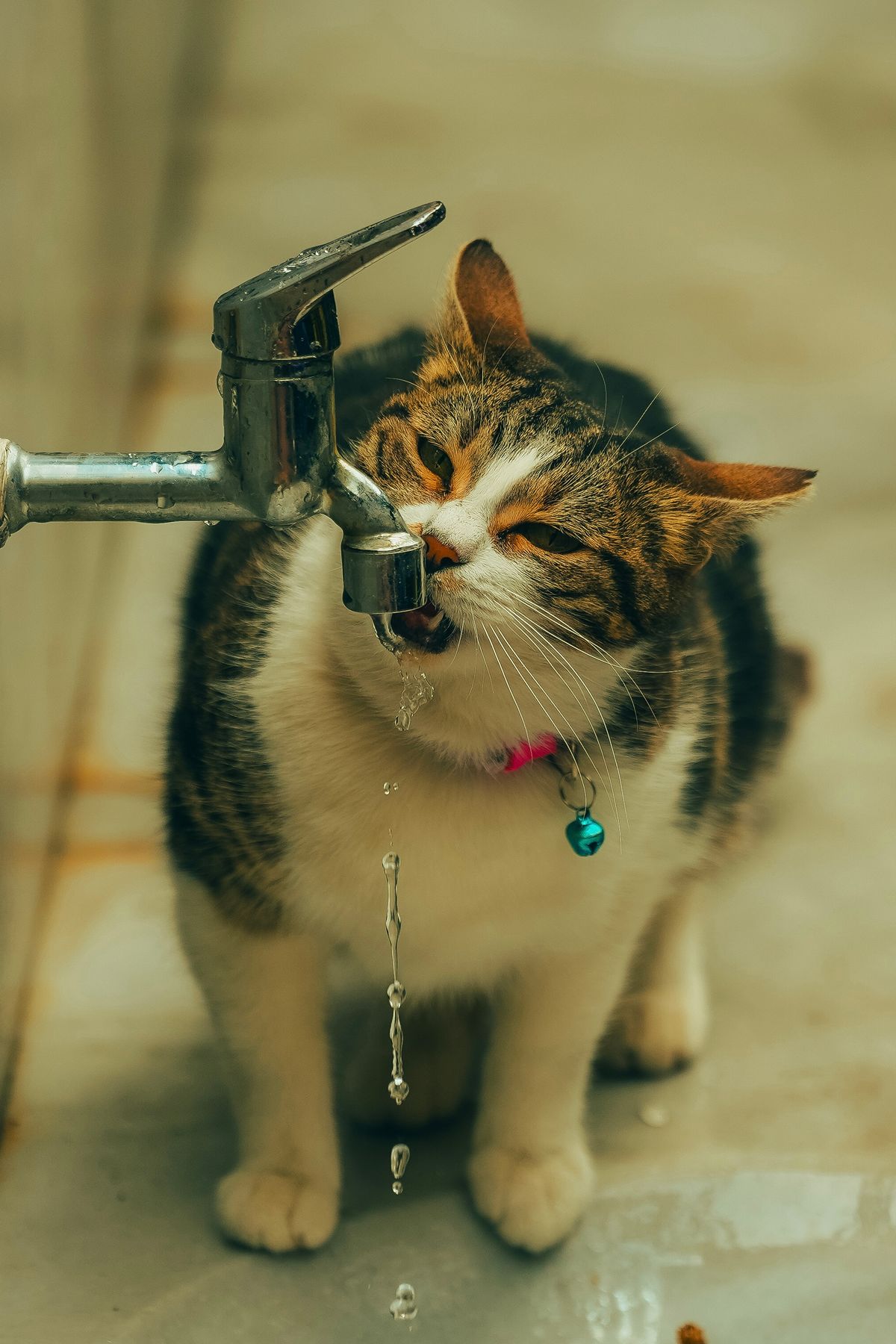
In Malaysia’s tropical climate, feline lower urinary tract disease is a genuine and often silent risk. Many cats experience a gradual progression that can be difficult for owners to notice. Mild discomfort and reduced water intake may eventually contribute to concentrated urine and struvite crystal formation. In the most severe cases, this can progress to a life-threatening urethral obstruction.
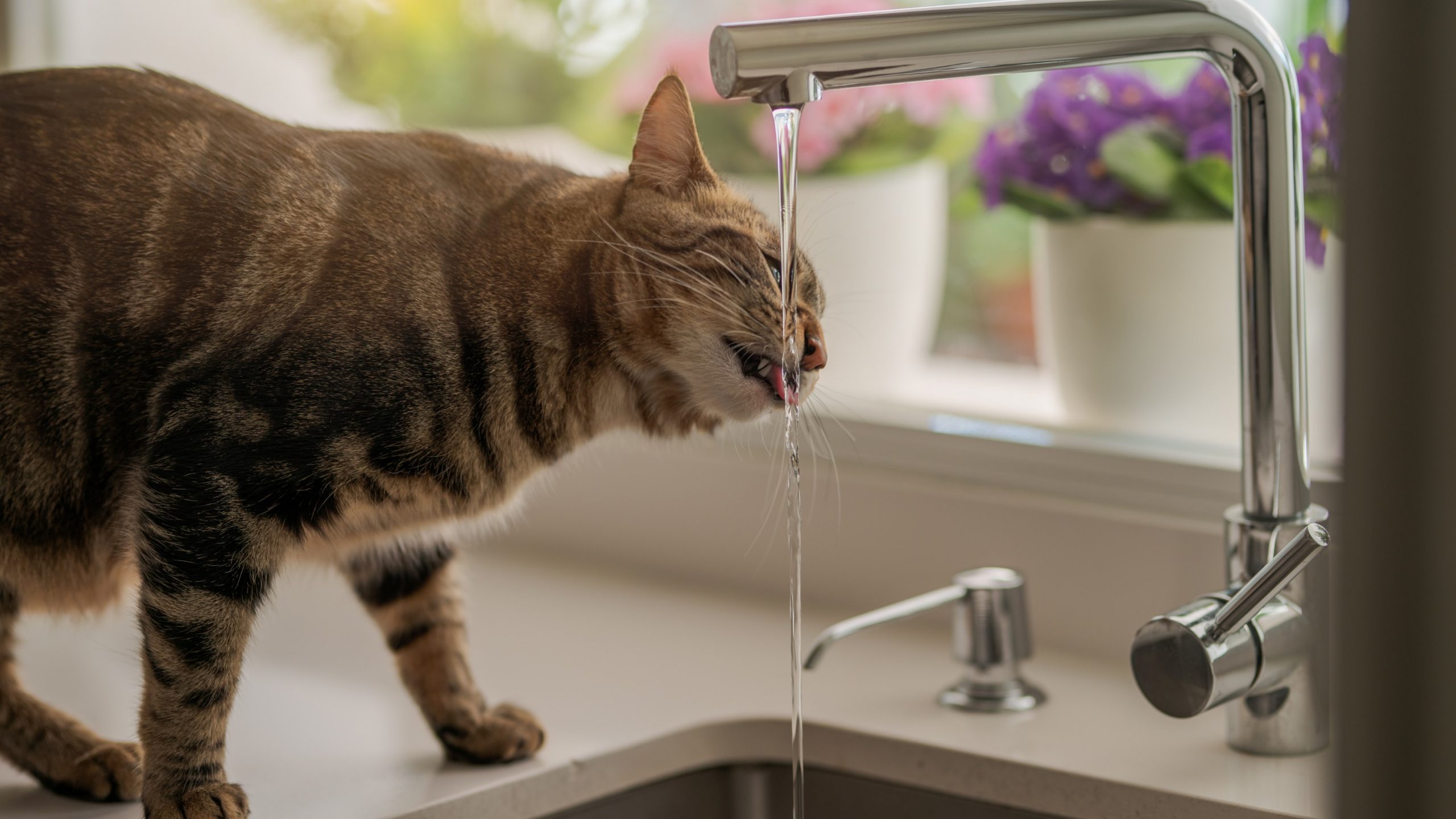
For cats affected by struvite-related urinary disease, nutrition is one of the key tools available to help manage the condition.
Heat, Dehydration, and Why Malaysian Cats May Be More Vulnerable
Malaysia’s high temperatures and humidity can contribute to increased insensible fluid losses. At the same time, some cats may not increase their water intake sufficiently to compensate, resulting in more concentrated urine and increased solute saturation. This is an important factor in the formation of urinary crystals.
As a general clinical benchmark, veterinary dehydration scoring recognises that fluid losses of approximately 10% of body weight are associated with serious and clinically apparent illness. Fluid losses approaching 12 to 15% are generally considered life-threatening.
For cats living in hot and humid environments, maintaining adequate hydration is therefore an important part of supporting urinary health.
The Danger of Mineral Build-Up
Struvite, or magnesium ammonium phosphate, crystals can form when urine becomes supersaturated with their mineral components. The risk increases when urine becomes more alkaline, particularly at a urinary pH above 7.0.
Experimental research has shown that cats fed calculogenic diets containing magnesium in the range of approximately 0.15 to 1.0% on a dry matter basis can develop struvite uroliths. The risk is influenced not only by the absolute amount of magnesium consumed, but also by urinary pH and other factors affecting urine composition (Nutrition and Urolithiasis review, PMC, 2024).
If urinary disease progresses to a complete urethral obstruction, the situation becomes a genuine veterinary emergency. Veterinary emergency medicine references indicate that biochemical signs associated with uremia may become detectable within approximately 36 to 48 hours of complete obstruction, with the condition potentially progressing to coma and death within approximately 72 hours without appropriate intervention.
The ProVet+ Foundation: Built to Support Urinary Health From the Base Up
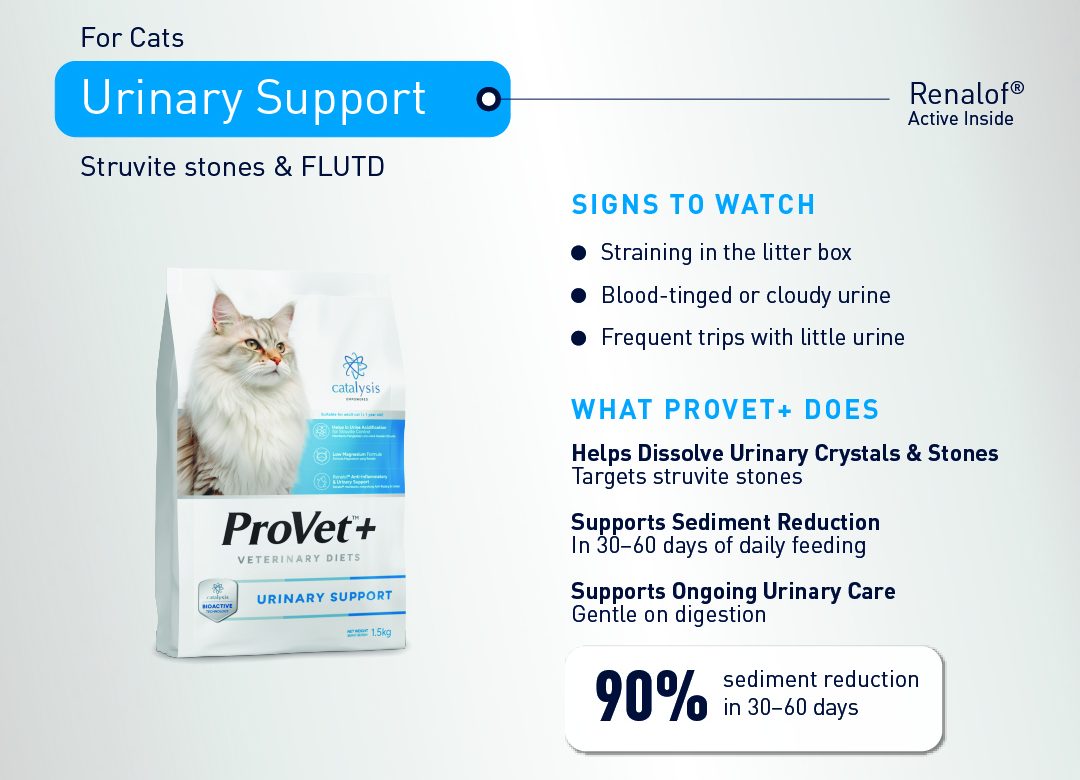
ProVet+ Urinary Support is formulated around two key nutritional mechanisms that are designed to address the factors involved in struvite formation.
1. Controlled Magnesium Levels
ProVet+ Urinary Support is formulated with magnesium capped at 0.08%.
Controlling dietary magnesium is intended to help reduce the availability of one of the key mineral components involved in struvite formation.
2. Urine Acidification From the Protein Base
ProVet+ Urinary Support uses methionine alongside naturally acidifying, sulfur-containing fish proteins. These include fish meal, salmon peptide, tuna hydrolysate, and digested animal protein.
The purpose is to support the maintenance of a more acidic urinary environment, which is an important part of managing the risk of struvite formation and supporting the dissolution of existing struvite uroliths.
Published clinical trial data supports this general nutritional approach. In a randomised, multicentre trial evaluating two commercially available low-magnesium, urine-acidifying diets, 32 of 37 cats achieved complete dissolution of struvite uroliths. Faster resolution was associated with the lower of the two mean urinary pH values tested, 6.08 compared with 6.43 (Lulich et al., 2013, JAVMA).
Renalof®: An Added Layer of Bladder Support
On top of this nutritional foundation, ProVet+ Urinary Support includes RENALOF®, Catalysis®’s proprietary phyto-therapeutic bioactive built around activated Agropyron repens (couch grass).
According to the manufacturer, RENALOF® is intended to provide soothing and anti-inflammatory support to the bladder lining.
Mannitol is also included for its mild osmotic diuretic effect, with the intention of supporting increased urine flow and helping to flush small mineral particles and micro-calculi.
The Bottom Line for Malaysian Veterinary Practice
Urinary disease in cats is not a wait-and-see condition. A complete urethral obstruction can rapidly become life-threatening and requires immediate veterinary intervention.
The strongest nutritional evidence supports a combined approach that considers controlled mineral intake, appropriate urine acidification, and increased water consumption, ideally supported through a purpose-built therapeutic diet.
ProVet+ Urinary Support is designed around this nutritional framework. We combine controlled magnesium levels and urine acidification at the foundation of the formula with targeted bioactive support from RENALOF®.
We encourage veterinarians and pet owners to consider ProVet+ Urinary Support as part of a broader, evidence-informed approach to feline urinary health.
*all quantitative medical claims are supported by Catalysis® trial evidence