

![Palatability: Past, Present and Future [Part I]](http://www.petworld.com.my/wp-content/uploads/2026/06/a2c3eef0-9ad7-4c4a-9a63-55e778a25b39-1.jpeg)
Why your cat ignores a perfectly good bowl of food — and the science behind getting it right
| 90% of a pet’s daily diet comes straight from a bag or a can. Getting them to actually eat it? That’s the hard part. |
Palatability describes how food is experienced during consumption. It includes elements like flavour, appearance, temperature, size, texture, and consistency (Bradshaw et al., 2006). A broader definition of palatability, taking a holistic approach, encompasses the entirety of the food, factors related to the animal, the influence of time and previous experiences, along with human and environmental factors (Aldrich and Koppel, 2015). Ensuring the production of premium cat food is crucial, as cats will refuse to consume any food that has undesirable flavours, regardless of whether the product is nutritionally complete and balanced (Pekel et al., 2020).
Pet Food Market Outlook
Discussion on pet food palatability would not be complete without to first consider the broader context of the pet food industry. The global pet food market is a rapidly growing sector, valued at billions of dollars and expected to continue expanding in the coming years due to increasing pet ownership and the humanisation of pets.
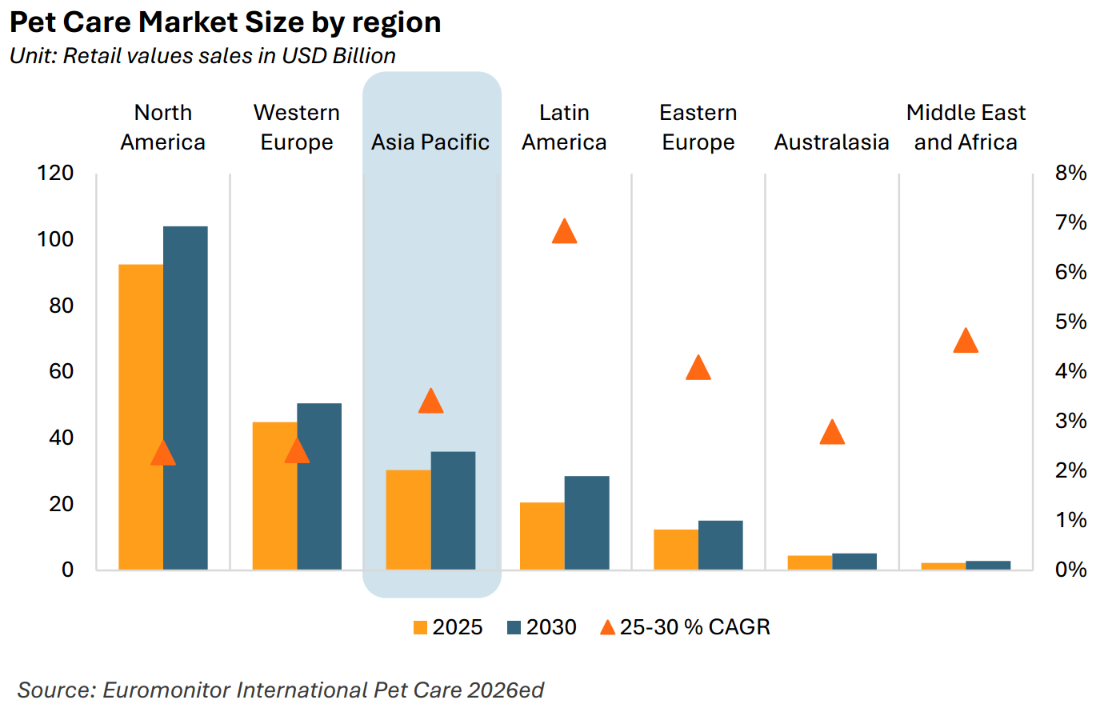
The graph from Euromonitor International Pet Care shows Asia Pacific market is 1/3 to that of North America, valuing at USD 30 billion in pet care market size. Out of which USD 20 billion comes from pet food. The market is predicted to grow gradually by about 3% per year from 2025 to 2030. Therefore, as the market grows and becomes more competitive, it is not enough for pet food to simply meet nutritional requirements. The product must also be appealing enough for pets to consume consistently. This highlights the importance of palatability, which plays a key role in product acceptance and ultimately market success.
Why Food Acceptance Matters
Companion animals only have access to what the owners provide, resulting in poorly diversified food range. Therefore, palatability is crucial to ensure the pets consume the nutritious, complete balanced food. 90% of pets’ caloric intake come from commercially prepared pet food (Bradshaw et al., 2006). In another study, 89% (n=1943) pet owner purchase commercial prepared food for their pets (Schleicher et al., 2019). In the same study, 85.8% (n=1872) of pet owners said dry food is always a part of their pets’ diet (Schleicher et al., 2019).
Therefore, palatability plays a crucial role in product success, repeat purchase and therapeutic diet compliance. In a study done by Ilias et al. 2022 to assess the palatability of therapeutic diets (struvites, renal, hypersensitivity, and intestinal) in cats showed there are behavioural differences in diet palatability among the cats, highlighting the importance of palatability. The cost of rejection is high that may result in product return, rework and ultimately will lead to brand damage. In a study done by Schleicher et al. 2019, taste ranked amongst the top 5 determinants on pet food choices.
Understanding Palatability Drivers
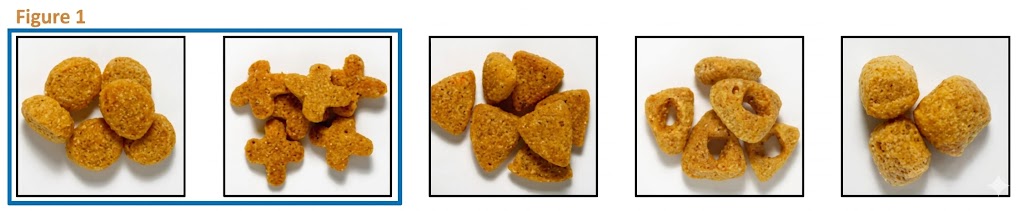
Palatability is influenced by a combination of food characteristics, animal-related factors, and environmental conditions. Food characteristics such as serving temperature, kibble size and shape, and textural attributes including hardness and crispness can affect food perception and consumption (Aldrich and Koppel, 2015). In a study conducted by AFB International, kibble shape was found to influence palatability in cats. Flat disc-shaped kibbles achieved high palatability scores, likely due to their larger surface area, which facilitates greater palatant adhesion and enhances flavour delivery. Similarly, cross-star shaped kibbles also demonstrated excellent palatability, suggesting that kibble geometry can affect cats’ sensory perception and acceptance of dry diets.
Animal factors also play a significant role, with age, physiological status, and health condition influencing feeding behaviour. For example, older cats may experience reduced olfactory sensitivity and diminished taste perception, potentially altering their response to food (Monforte, 2025). Early-life experiences can further shape dietary preferences, as kittens may develop flavour preferences through exposure to their mother’s diet during gestation and lactation.
In addition, human and environmental influences can affect palatability outcomes. Positive encouragement from owners, competition in multi-pet households, and the feeding environment, whether quiet or noisy, may alter feeding motivation and food intake. Together, these factors contribute to the complex nature of palatability and should be considered when evaluating pet food acceptance and preference.
Understanding Sensory Biology of Pets versus Humans
Food preference in dogs and cats is primarily driven by olfaction, with smell exerting a greater influence than taste during food selection (Bradshaw, 2006). This reliance on olfactory cues is reflected in the anatomy of their sensory systems. Cats possess approximately 470–500 taste buds but around 200 million olfactory receptors, making smell the dominant sensory modality in food evaluation (Jiang et al., 2012; Hudson et al., 2018). In addition, cats are highly responsive to animal protein-derived flavours but lack the ability to detect sweetness.
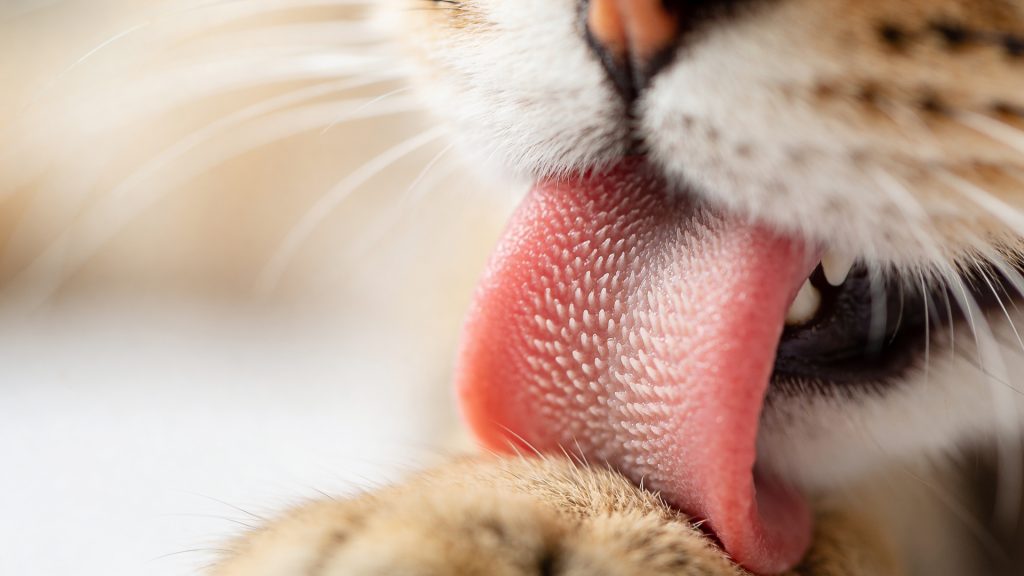
| A cat’s nose is roughly 14× more sensitive than a human’s — smell, not taste, decides what’s for dinner. |
Similarly, dogs have approximately 1,700 taste buds and 220–300 million olfactory receptors, allowing them to perceive sweet, umami, and salty tastes, although olfaction remains a key determinant of food preference (Jiang et al., 2012; Hudson et al., 2018). In contrast, humans possess approximately 9,000–10,000 taste buds but only 5–10 million olfactory receptors, resulting in a greater reliance on taste rather than smell when making food choices. These interspecies differences highlight the importance of aroma and volatile compounds in influencing the palatability and acceptance of pet foods.
Cats exhibit relatively limited gustatory sensitivity compared with many other animals (Pekel et al., 2020). Domestic cats possess at least seven functional bitter taste receptors and generally show aversion to bitter compounds, a response that is less consistently observed in dogs and many other mammalian species (Sandau et al., 2015). In addition, cats lack responsiveness to several sweet-tasting compounds, including glucose, sucrose, and fructose, due to the deletion of the Tas1r sweet taste receptor gene expressed in taste buds (Li et al., 2005). Despite this reduced taste repertoire, cats rely strongly on olfactory cues, with a sense of smell estimated to be approximately 14 times more sensitive than that of humans (Pekel et al., 2020). This enhanced olfactory capability is associated with approximately twice the number of olfactory receptors in the nasal epithelium compared with humans (Padodara and Jacob, 2014), highlighting the dominant role of smell over taste in feline food perception and selection.

Dogs possess the fundamental taste modalities, including sweet, bitter, and umami, mediated by taste receptors such as sweet (TAS1R) and bitter (TAS2R) receptor families; however, their gustatory system differs quantitatively and functionally from that of humans (Gibbs et al., 2022). Compared with humans, dogs have fewer taste buds and exhibit variations in bitter receptor sensitivity, suggesting differences in how bitter compounds are perceived across species (Gibbs et al., 2022). Unlike cats, dogs retain the ability to detect sweet taste due to a functional TAS1R2 receptor, which enables responsiveness to sugars such as sucrose and glucose (Nishihara et al., 2024). Dogs are also capable of perceiving bitterness through TAS2R receptors, although their sensitivity range and perceptual responses do not fully align with human bitter taste perception (Shang et al., 2017). Despite these gustatory capabilities, olfaction remains the dominant sensory modality in canine food perception, with smell playing a far greater role than taste in food identification and discrimination, as supported by behavioural anosmia studies (Houpt et al., 1982).
Reference
- Aldrich, G. C., & Koppel, K. (2015). Pet Food Palatability Evaluation: A Review of Standard Assay Techniques and Interpretation of Results with a Primary Focus on Limitations. Animals (Basel), 5(1), 43-55. https://doi.org/10.3390/ani5010043
- Araujo, J. A., Studzinski, C. M., Larson, B. T., & Milgram, N. W. (2004). Comparison of the cognitive palatability assessment protocol and the two-pan test for use in assessing palatability of two similar foods in dogs. American journal of veterinary research, 65(11), 1490–1496. https://doi.org/10.2460/ajvr.2004.65.1490
- Bradshaw J. W. (2006). The evolutionary basis for the feeding behavior of domestic dogs (Canis familiaris) and cats (Felis catus). The Journal of nutrition, 136(7 Suppl), 1927S–1931S. https://doi.org/10.1093/jn/136.7.1927S
- Euromonitor Pet Care Industry Performance 2026
- https://www.afbinternational.com/blog/white_paper/kibble-shape-and-its-effect-on-feline-palatability/
- https://www.feedandadditive.com/impact-of-ingredients-freshness-on-cat-and-dog-dry-pet-food-palatability/
- Hudson, R., Distel, H., & Kubesová, A. (2018). The role of olfactory and thermal cues in kitten and puppy suckling behavior. Journal of Comparative Physiology A, 204(1), 71–85. https://doi.org/10.1007/s00359-017-1215-1
- Houpt, K. A., Davis, P. P., & Hintz, H. F. (1982). Effect of peripheral anosmia in dogs trained as flavor validators. American journal of veterinary research, 43(5), 841–843.
- Ilias, N., Zaki, A. H. H., Junaidi, A. H. A., Fong, L. S., Saufi, I., & Ajat, M. (2022). Palatability assessment of prescribed diets on domestic shorthair cats. Veterinary world, 15(3), 640–646. https://doi.org/10.14202/vetworld.2022.640-646
- Jiang, P., Josue, J., Li, X., Glaser, D., Li, W., Brand, J. G., Margolskee, R. F., Reed, D. R., & Beauchamp, G. K. (2012). Major taste loss in carnivorous mammals. Proceedings of the National Academy of Sciences of the United States of America, 109(13), 4956–4961. https://doi.org/10.1073/pnas.1118360109
- Li, X., Li, W., Wang, H., Cao, J., Maehashi, K., Huang, L., Bachmanov, A. A., Reed, D. R., Legrand-Defretin, V., Beauchamp, G. K., & Brand, J. G. (2005). Pseudogenization of a sweet-receptor gene accounts for cats’ indifference toward sugar. PLoS genetics, 1(1), 27–35. https://doi.org/10.1371/journal.pgen.0010003
- Monforte, A. R. (2025, April). [Flavor Preference in Cats Across Life Stages]. Presentation at Pet Food Forum 2025, Kansas City, Missouri, United States.
- Nishihara, H., Toda, Y., Kuramoto, T., Kamohara, K., Goto, A., Hoshino, K., Okada, S., Kuraku, S., Okabe, M., & Ishimaru, Y. (2024). A vertebrate-wide catalogue of T1R receptors reveals diversity in taste perception. Nature ecology & evolution, 8(1), 111–120. https://doi.org/10.1038/s41559-023-02258-8
- McGrane, S. J., Gibbs, M., Hernangomez de Alvaro, C., Dunlop, N., Winnig, M., Klebansky, B., & Waller, D. (2023). Umami taste perception and preferences of the domestic cat (Felis catus), an obligate carnivore. Chemical senses, 48, bjad026. https://doi.org/10.1093/chemse/bjad026
- Padodara, Ramesh. (2014). Olfactory Sense in Different Animals. The Indian Journal of Veterinary Science. 2. 1-14.
- Pekel, A. Y., Mülazımoğlu, S. B., & Acar, N. (2020). Taste preferences and diet palatability in cats. Journal of Applied Animal Research, 48(1), 281–292. https://doi.org/10.1080/09712119.2020.1786391
- Sandau, M. M., Goodman, J. R., Thomas, A., Rucker, J. B., & Rawson, N. E. (2015). A functional comparison of the domestic cat bitter receptors Tas2r38 and Tas2r43 with their human orthologs. BMC neuroscience, 16, 33. https://doi.org/10.1186/s12868-015-0170-6
- Schleicher, M., Cash, S. B., & Freeman, L. M. (2019). Determinants of pet food purchasing decisions. The Canadian veterinary journal = La revue veterinaire canadienne, 60(6), 644–650.
- Shang, S., Wu, X., Chen, J., Zhang, H., Zhong, H., Wei, Q., Yan, J., Li, H., Liu, G., Sha, W., & Zhang, H. (2017). The repertoire of bitter taste receptor genes in canids. Amino acids, 49(7), 1159–1167. https://doi.org/10.1007/s00726-017-2422-5