

![Palatability: Past, Present and Future [Part II]](http://www.petworld.com.my/wp-content/uploads/2026/06/a2c3eef0-9ad7-4c4a-9a63-55e778a25b39-1.jpeg)
Common Palatability Enhancement Strategies
Palatability in pet food is commonly enhanced through a combination of ingredient-based and process-driven strategies designed to improve aroma, taste, and overall acceptance. One key approach is the use of palatants such as hydrolysed animal proteins, which provide concentrated flavour compounds that stimulate both taste and olfactory responses. Fat coating is also widely applied to improve flavour delivery and mouthfeel, while natural flavours derived from animal protein sources, including rendered or fresh materials, further enhance sensory appeal. In addition, yeast extracts rich in glutamates contribute umami intensity, and targeted amino acid supplementation—such as glycine, cysteine, and tryptophan—can modulate flavour profiles and palatability perception. Beyond formulation, surface application technologies are used to ensure uniform distribution and effective adhesion of palatants onto kibble surfaces. Finally, processing parameters, including temperature control and drying conditions, play a critical role in preserving volatile compounds and optimising the overall effectiveness of palatability enhancement strategies.
Animal fats are commonly used as a primary lipid source in pet foods and play an important role not only in providing energy but also in contributing significantly to aroma and overall palatability. Not only the type of fat, but also its quality significantly influences palatability. In both dogs and cats, an inverse relationship has been observed between free fatty acid (FFA) levels in fats and intake ratio (IR). When FFA levels in the test and control fats are comparable, intake ratios tend to remain similar, indicating minimal impact on consumption. However, as FFA levels increase, intake ratio generally declines, suggesting reduced palatability and lower voluntary intake (Marchioni, 2024). This pattern has been consistently observed across both species, including cats. Overall, these findings indicate that fat quality, particularly FFA content, plays a critical role in determining the palatability and acceptance of pet food.
Measuring Palatability – beyond two bowl tests
Palatability in companion animals cannot be directly assessed, as they are unable to communicate their preferences or level of enjoyment (Araujo et al. 2004), palatability testing is commonly used in the pet food industry to assess and continue improving the pet food, which will increase the chances of returning buyers. Common methods for evaluating pet food palatability include preference and acceptance tests. Preference assessment allows cats to choose between two or more food options and is used to determine relative preference based on direct comparison (Aldrich and Koppel, 2015). Acceptance testing, in contrast, evaluates whether pets consume sufficient amounts of a food to maintain body weight and performance, independent of specific flavour or aroma characteristics (Aldrich and Koppel, 2015). A diet may be readily accepted by cats yet not be preferred when compared with another diet, highlighting the distinct implications of acceptance and preference outcomes for product formulation and development.
Challenges & Future Directions
Food intake and palatability are also influenced by behavioural responses to novelty and repeated exposure. The novelty effect refers to an animal’s initial reaction to new foods, which may range from neophilia (attraction to novelty) to neophobia (avoidance of unfamiliar items). In contrast, the monotony effect describes a decline in food acceptance due to repeated consumption of the same diet, commonly referred to as flavour fatigue. As exposure continues, the palatability of the repeated food tends to decrease, leading to reduced appeal and potentially lower intake over time. To counteract this decline, flavour rotation strategies are often employed, which help maintain interest in the diet and support more consistent food consumption.
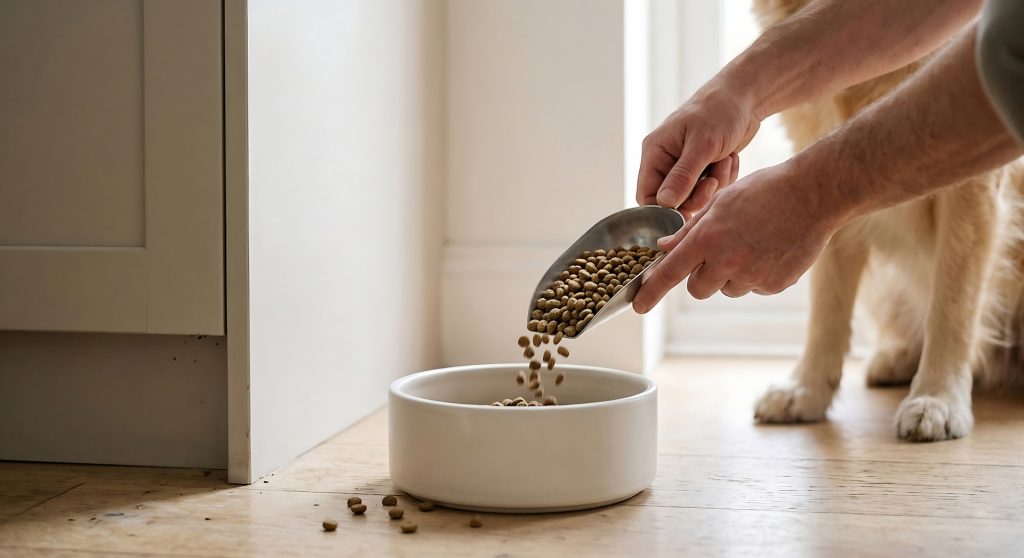
The future of pet food palatability assessment is expected to extend beyond traditional acceptance and preference tests through the integration of automated feeding technologies and advanced data analytics. Electronic feeders and food sensors can continuously monitor key feeding parameters, including food intake (grams or calories consumed), feeding time and duration, and feeding frequency. These systems are often coupled with data loggers and specialised software that automatically store large volumes of data, track individual animals, and generate graphical outputs for detailed analysis. The resulting datasets provide a more comprehensive understanding of feeding behaviour, enabling researchers to evaluate not only palatability but also nutritional intake patterns, meal structure, and changes in feeding behaviour over time. Such technologies may also facilitate the early detection of health or behavioural issues, offering a more objective and data-driven approach to assessing pet food acceptance and long-term feeding responses.
Several emerging trends are shaping the future of pet food palatability enhancement. While palatability remains a key driver of product success, the growing demand for clean label products is transforming the sector. Manufacturers are increasingly challenged to deliver strong sensory performance while meeting consumer expectations for simple ingredient lists, natural ingredients, ingredient transparency, and regulatory compliance. This shift creates both technical challenges and opportunities for innovation in palatability solutions. At the same time, sustainability considerations are influencing raw material sourcing, formulation strategies, processing methods, and consumer purchasing decisions. Sustainability can present challenges, particularly in maintaining product palatability while reducing environmental impact; however, it also offers opportunities to differentiate products through the use of natural, sustainable, and functional flavour ingredients. Consequently, sustainability is driving innovation in palatant production, including the use of yeast and microbial fermentation to generate natural flavour compounds, the utilisation of plant-based proteins as substrates for palatant development, and the upcycling of food by-products into flavour-rich ingredients.
The increasing adoption of alternative protein sources, such as insect proteins and plant-based proteins, further reflects the industry’s sustainability goals. Although these ingredients generally have a lower environmental footprint than conventional animal proteins, ensuring that their inclusion does not compromise palatability remains a significant challenge. In addition, manufacturers must continuously balance palatability performance with cost optimisation. Palatants often represent a substantial proportion of the formulation cost in pet foods, requiring careful evaluation of their cost-effectiveness while maintaining consumer acceptance and feeding performance. Together, these trends highlight the need for innovative, sustainable, and economically viable approaches to future palatability enhancement.
AI-Driven Approaches to Pet Food Palatability Assessment
| What if we could read a cat’s face while it eats? AI may soon make that possible. |
Future advancements in pet food palatability assessment may involve the integration of artificial intelligence (AI) to objectively evaluate animal responses before, during, and after feeding. Instead of relying solely on manual observation, AI-powered systems could analyse multiple behavioural and physiological indicators, including facial expressions, heart rate, respiratory rate, pupil dilation, body movements, and feeding rate. By continuously monitoring and interpreting these parameters, AI models may provide a more comprehensive understanding of an animal’s perception and acceptance of food. Such approaches have the potential to improve the accuracy and consistency of palatability assessments while reducing observer bias and enhancing the efficiency of data collection and analysis.
Summary
Palatability is a critical factor influencing pet food acceptance, intake, and ultimately the success of a product in the marketplace. The complex interaction between olfaction, taste perception, ingredient composition, processing conditions, and animal-related factors highlights that palatability extends far beyond simple flavour preference. As consumer expectations and technological capabilities continue to evolve, the pet food industry must balance sensory performance, nutritional quality, sustainability, and economic feasibility to develop products that meet the needs of both pets and their owners. To remain competitive in an evolving marketplace, the pet food industry must go beyond traditional concepts of palatability and adopt a holistic approach that integrates sensory science, consumer expectations, sustainability, and emerging technologies to deliver superior feeding experiences for pets.

PET WORLD is investing in a dedicated research centre for next-generation palatability evaluation — automated feeding systems, real-time behavioural monitoring, and advanced data analytics, all in one facility.
Recognising this shift, PET WORLD is investing in the development of a dedicated research centre focused on next-generation palatability evaluation. The facility is designed to incorporate state-of-the-art automated feeding systems, real-time behavioural monitoring, and advanced data analytics capabilities to generate more accurate and comprehensive palatability data. By integrating technology with nutritional and sensory science, PET WORLD aims to enhance its research capabilities, accelerate product innovation, and develop highly palatable pet foods that meet the evolving expectations of both pets and pet owners. This strategic investment positions the company at the forefront of modern palatability research and reinforces its commitment to scientific excellence and continuous innovation.
Reference
- Aldrich, G. C., & Koppel, K. (2015). Pet Food Palatability Evaluation: A Review of Standard Assay Techniques and Interpretation of Results with a Primary Focus on Limitations. Animals (Basel), 5(1), 43-55. https://doi.org/10.3390/ani5010043
- Araujo, J. A., Studzinski, C. M., Larson, B. T., & Milgram, N. W. (2004). Comparison of the cognitive palatability assessment protocol and the two-pan test for use in assessing palatability of two similar foods in dogs. American journal of veterinary research, 65(11), 1490–1496. https://doi.org/10.2460/ajvr.2004.65.1490
- Bradshaw J. W. (2006). The evolutionary basis for the feeding behavior of domestic dogs (Canis familiaris) and cats (Felis catus). The Journal of nutrition, 136(7 Suppl), 1927S–1931S. https://doi.org/10.1093/jn/136.7.1927S
- Euromonitor Pet Care Industry Performance 2026
- https://www.afbinternational.com/blog/white_paper/kibble-shape-and-its-effect-on-feline-palatability/
- https://www.feedandadditive.com/impact-of-ingredients-freshness-on-cat-and-dog-dry-pet-food-palatability/
- Hudson, R., Distel, H., & Kubesová, A. (2018). The role of olfactory and thermal cues in kitten and puppy suckling behavior. Journal of Comparative Physiology A, 204(1), 71–85. https://doi.org/10.1007/s00359-017-1215-1
- Houpt, K. A., Davis, P. P., & Hintz, H. F. (1982). Effect of peripheral anosmia in dogs trained as flavor validators. American journal of veterinary research, 43(5), 841–843.
- Ilias, N., Zaki, A. H. H., Junaidi, A. H. A., Fong, L. S., Saufi, I., & Ajat, M. (2022). Palatability assessment of prescribed diets on domestic shorthair cats. Veterinary world, 15(3), 640–646. https://doi.org/10.14202/vetworld.2022.640-646
- Jiang, P., Josue, J., Li, X., Glaser, D., Li, W., Brand, J. G., Margolskee, R. F., Reed, D. R., & Beauchamp, G. K. (2012). Major taste loss in carnivorous mammals. Proceedings of the National Academy of Sciences of the United States of America, 109(13), 4956–4961. https://doi.org/10.1073/pnas.1118360109
- Li, X., Li, W., Wang, H., Cao, J., Maehashi, K., Huang, L., Bachmanov, A. A., Reed, D. R., Legrand-Defretin, V., Beauchamp, G. K., & Brand, J. G. (2005). Pseudogenization of a sweet-receptor gene accounts for cats’ indifference toward sugar. PLoS genetics, 1(1), 27–35. https://doi.org/10.1371/journal.pgen.0010003
- Monforte, A. R. (2025, April). [Flavor Preference in Cats Across Life Stages]. Presentation at Pet Food Forum 2025, Kansas City, Missouri, United States.
- Nishihara, H., Toda, Y., Kuramoto, T., Kamohara, K., Goto, A., Hoshino, K., Okada, S., Kuraku, S., Okabe, M., & Ishimaru, Y. (2024). A vertebrate-wide catalogue of T1R receptors reveals diversity in taste perception. Nature ecology & evolution, 8(1), 111–120. https://doi.org/10.1038/s41559-023-02258-8
- McGrane, S. J., Gibbs, M., Hernangomez de Alvaro, C., Dunlop, N., Winnig, M., Klebansky, B., & Waller, D. (2023). Umami taste perception and preferences of the domestic cat (Felis catus), an obligate carnivore. Chemical senses, 48, bjad026. https://doi.org/10.1093/chemse/bjad026
- Padodara, Ramesh. (2014). Olfactory Sense in Different Animals. The Indian Journal of Veterinary Science. 2. 1-14.
- Pekel, A. Y., Mülazımoğlu, S. B., & Acar, N. (2020). Taste preferences and diet palatability in cats. Journal of Applied Animal Research, 48(1), 281–292. https://doi.org/10.1080/09712119.2020.1786391
- Sandau, M. M., Goodman, J. R., Thomas, A., Rucker, J. B., & Rawson, N. E. (2015). A functional comparison of the domestic cat bitter receptors Tas2r38 and Tas2r43 with their human orthologs. BMC neuroscience, 16, 33. https://doi.org/10.1186/s12868-015-0170-6
- Schleicher, M., Cash, S. B., & Freeman, L. M. (2019). Determinants of pet food purchasing decisions. The Canadian veterinary journal = La revue veterinaire canadienne, 60(6), 644–650.
- Shang, S., Wu, X., Chen, J., Zhang, H., Zhong, H., Wei, Q., Yan, J., Li, H., Liu, G., Sha, W., & Zhang, H. (2017). The repertoire of bitter taste receptor genes in canids. Amino acids, 49(7), 1159–1167. https://doi.org/10.1007/s00726-017-2422-5