

The cycle of recurring illness (skin flare-ups, chronic GI distress, or the return of urinary blockages) is one of the most frustrating challenges in veterinary practice, for clinicians and owners alike. Even with effective treatment, many patients remain in a state of ongoing metabolic stress, where standard commercial nutrition simply doesn’t supply the support the body needs.
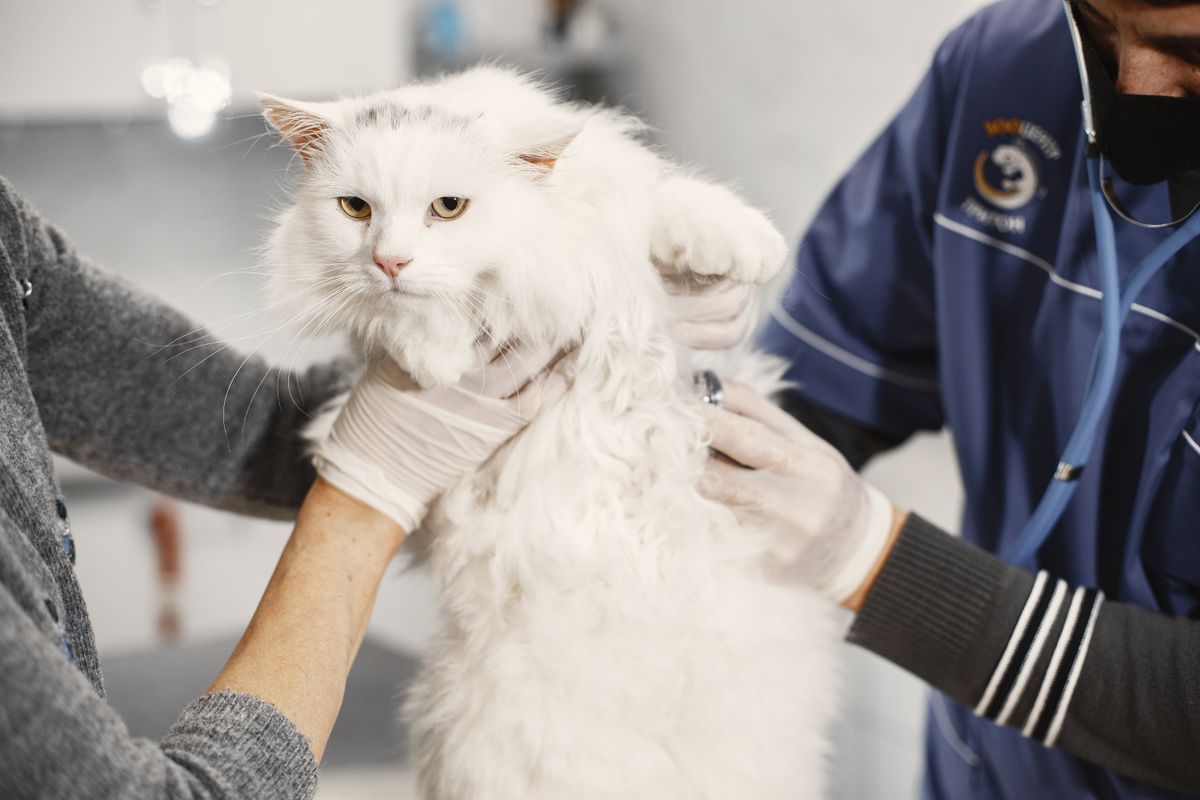
Recurring illness is one of the most frustrating challenges in veterinary practice.
The Limitation of Maintenance Nutrition
Standard pet foods are engineered for healthy animals at specific life stages. During an active disease state, though, the body’s physiological needs shift substantially, and a maintenance formula can quietly work against recovery in at least two ways.
Protein recognition. The immune system doesn’t evaluate a protein by its ingredient label, but rather by its size. Molecular allergy research in dogs and cats has consistently placed the size of common intact food allergens in a broad range of roughly 10–70 kilodaltons (kDa), with some industry and patient-literature sources citing a narrower “most common” band above approximately 20 kDa, and independent studies generally agreeing that IgE-mediated recognition in dogs begins fragments above roughly 5 kDa (Bexley et al., 2017, BMC Veterinary Research; hydrolysed-diet lymphocyte studies summarised in Fujimura, 2011, and Masuda, 2020). A pet with an already inflamed gut or reactive immune system has a compromised barrier that lets more of these larger, “visible” proteins through, triggering the very inflammatory cascade the treatment plan is trying to stop.
Mineral load. Mineral levels that are entirely appropriate for a healthy cat can become a liability once the urinary tract is already under stress. This is most clearly illustrated in feline struvite urolithiasis: a standard maintenance diet isn’t formulated to actively limit magnesium, and elevated dietary magnesium, combined with dilute, alkaline urine, is one of the primary drivers of struvite crystal formation in the bladder (Lulich et al., 2013; Improve International, 2025). A commercial diet typically does not correct the mineral environment once a cat has already shown a tendency to form crystals. Hence reducing dietary magnesium, alongside urine acidification, is a foundational part of both preventing and managing struvite recurrence, precisely the gap that ProVet+ Urinary Support is designed to close.
Breaking the Cycle with the ProVet+ 6-SKU Range
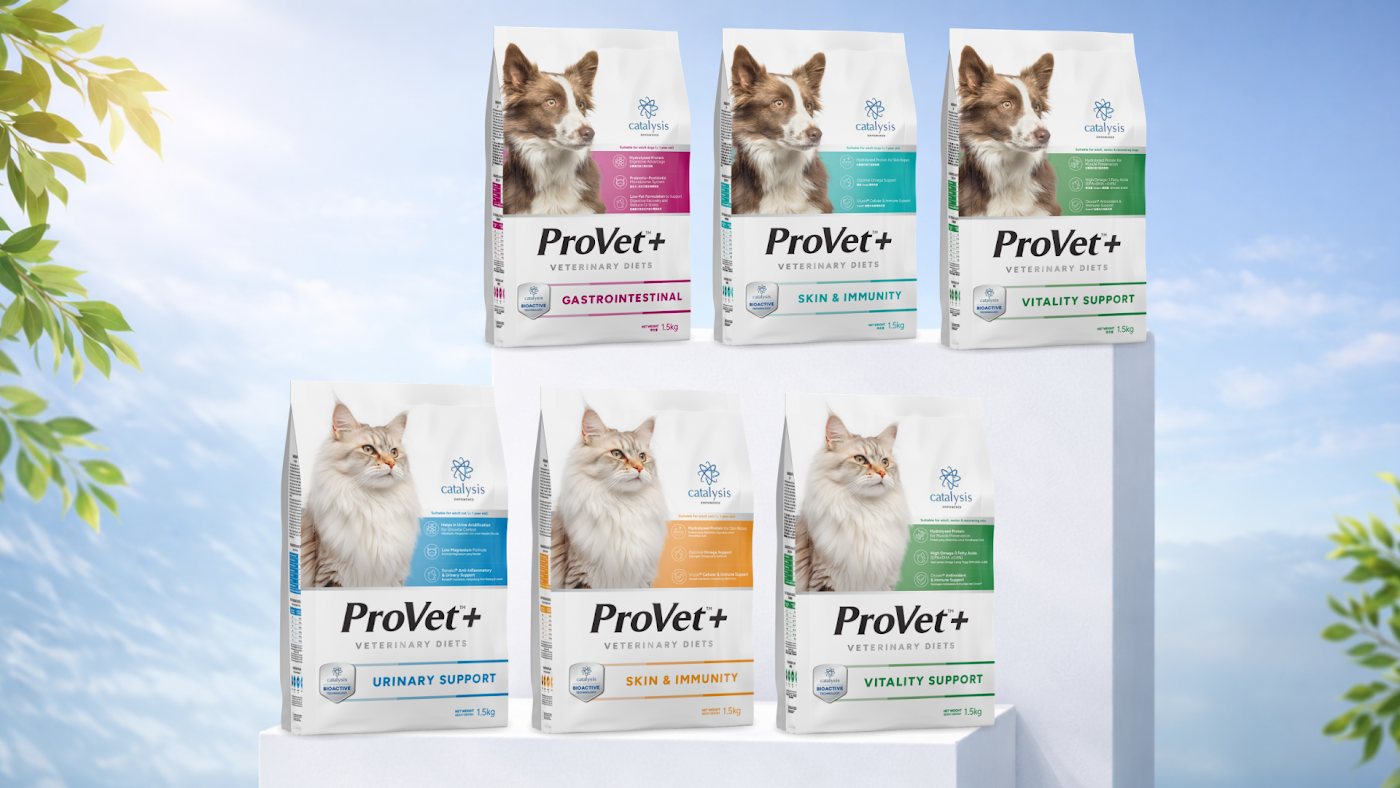
Rather than positioning one formula as a cure-all, ProVet™+ replaces general maintenance with targeted clinical formulations, each mapped to a specific condition and built on a highly digestible, low-molecular-weight peptide foundation shared across the entire range.
The Shared “Spine”: What’s Common Across All 6 SKUs
Every ProVet+ formula is built on the same functional backbone:
The ProVet+ range spans six clinically-focused formulas across cats and dogs.
| Role | Ingredient(s) | Why it’s there |
|---|---|---|
| Primary animal protein | Fish Meal | Highly digestible, naturally acidifying (sulfur amino acids), a potential source of omega-3 |
| Hydrolysed protein | Salmon Peptide, Tuna Hydrolysate | <6.5 kDa. Small enough to sit below the molecular weight range most consistently linked to allergic recognition |
| Plant protein | Pea Protein, Vegetable Protein | Digestible amino acid/energy source, low allergenicity |
| Carbohydrate | Rice | Low-residue, low-allergen, gentle on GI transit |
| Fat / omega source | Poultry Fat, Sardine Oil, Tuna Oil | Omega-6 (barrier, energy) + omega-3 EPA/DHA (anti-inflammatory) |
| Gut-toxin binder | Montmorillonite & Yeast | Binds toxins, supports microbial balance |
| Prebiotic fibre | Fructo-Oligosaccharide (FOS) | Feeds beneficial gut bacteria (present in all six SKUs) |
| Antioxidant system | Vitamin E, Vitamin C, Antioxidant blend | Cellular oxidative stress protection |
| Digestive comfort | Yucca Schidigera | Anti-inflammatory, reduces stool odour |
| Electrolyte/structure | Choline Chloride, Sodium Chloride, Potassium Chloride, Calcium Carbonate, Calcium Propionate | Electrolyte balance, preservation |
Free from corn, soy, and wheat across the range.
ProVet+ Cat Urinary Support: Infused with Renalof®
ProVet+ Urinary Support for cats is formulated to manage Feline Lower Urinary Tract Disease (FLUTD), specifically struvite urolithiasis, by limiting dietary magnesium and actively acidifying urine. This approach mirrors published clinical guidance: diets lower in magnesium that also acidify urine, working toward a target pH generally below 6.5, are the established standard for both preventing and dissolving struvite crystals (Lulich et al., 2013, 2016). ProVet+ Urinary Support is formulated to work toward this same target..
Additional Ingredients: Methionine, Cranberry Powder, Mannan-Oligosaccharide (MOS), Enzymes, Taurine, Cellulose.
Guaranteed Analysis:
- Magnesium: 0.08% (Max): Urinary Support is the only SKU in the range with a magnesium ceiling, directly supporting struvite risk reduction.
- Urine acidification: Delivered two ways: Methionine as a direct urinary acidifier, plus naturally acidifying sulfur amino acids from Fish Meal, Salmon Peptide, Tuna Hydrolysate, and Digested Animal Protein.
- Renalof®: Layered on top as kidney and urinary-tract phyto-therapeutic support.
- Cranberry Powder: Adds an anti-adhesion layer, helping reduce bacterial (E. coli) adhesion to the bladder wall and addressing the infection-risk side of FLUTD.
ProVet+ Dog Gastrointestinal: Infused with Carminal®
ProVet+ Gastrointestinal is designed for dogs with acute malabsorption or chronic pancreatic insufficiency, using low-fat ingredients and a Prebiotic–Postbiotic Microbiome System to restore gut barrier integrity. Fat restriction is a well-established pillar of managing both acute GI upset and chronic pancreatitis, since malabsorbed fat is acted on by intestinal bacteria in ways that worsen diarrhoea, and a high-fat diet can over-stimulate an already-compromised pancreas (dvm360 clinical review, 2022; BLUE NVD GI Low Fat clinical summary). Layered on this low-fat, highly digestible base, controlled trials in dogs show that specific prebiotic (baobab fruit pulp, acacia gum) and postbiotic (inactivated Lactobacillus and yeast fraction) blends can measurably support intestinal barrier markers and reduce inflammatory biomarkers such as faecal calprotectin (Pilla & Suchodolski, 2021; peer-reviewed trials in Veterinary Sciences, 2026, and Journal of Animal Science, 2025).
Additional Ingredients: Postbiotics, Cellulose, Sucrose, Glucosamine & Chondroitin Sulfate, Green Tea Powder.
Guaranteed Analysis:
- Fat: 11% (Min): the lowest fat guarantee across the dog range (Skin & Immunity and Vitality Support are both 14% min), reflecting the formula’s leaner profile relative to the rest of the line.
- Postbiotics: Included specifically in the GI and Skin & Immunity formulas, forming the ingredient basis for the “Prebiotic–Postbiotic Microbiome System.”
- Carminal®: Its key components include Aloe Vera, L-Glutamic acid / Glutamine, and B-complex vitamins. It helps reduce stomach acid, gas, and inflammation while healing the digestive lining in dogs and cats
(Cats & Dogs) ProVet+ Skin & Immunity: Infused with Viusid®
The core clinical objective of ProVet+ Skin & Immunity is identical across both dog and cat formulas: support a compromised skin barrier and modulate the immune response driving chronic dermatitis, allergic skin disease, and infection susceptibility. This is achieved through three formulation pillars:
- Hydrolysed Proteins Below the Allergenic Threshold. Every formula uses salmon peptide and tuna hydrolysate kept below 6.5 kDa, below the molecular weight range most consistently associated with allergic recognition (Masuda et al., 2020; Olivry & Mueller, 2019). This matters most for pets managing cutaneous adverse food reactions (food allergy): a novel, heavily hydrolysed protein source can reduce the immune system’s ability to recognise and react to it. For pets with atopic dermatitis (a reaction driven by ongoing exposure to environmental allergens rather than diet), the formula supports the skin barrier and helps calm the inflammatory response that makes flare-ups worse.
- Targeted Fatty Acid Support. Both formulas share the same omega-6:omega-3 ratio (sourced from poultry fat, sardine oil, and tuna oil) to structurally support skin barrier integrity and reduce the systemic inflammatory response.
- Viusid® – Advanced Antioxidant Defence. Its key components include monoammonium glycyrrhizinate (licorice root extract), glucosamine, and essential amino acids and vitamins.
Differences:
- Postbiotics are included in the dog formula, targeting the gut-immune axis implicated in chronic canine skin conditions. The cat formula instead uses mannan-oligosaccharides and enzymes to support gut-immune function.
- Taurine is required and included in the cat formula only, as cats cannot synthesise sufficient taurine endogenously.
(Cats & Dogs) ProVet+ Vitality Support: Infused with Ocoxin®
The core clinical objective of ProVet+ Vitality is identical across both cat and dog formulas: preserve lean muscle mass and support immune function in ageing, recovering, or metabolically compromised patients, or in pets receiving oncology cachexia support. By providing high-protein, antioxidant-fortified nutrition, this diet helps preserve lean muscle mass and support tolerance of concurrent treatment.
This formulation directly addresses sarcopenia and cachexia, the progressive loss of lean body mass associated with reduced strength, weakened immune function, and shorter survival times in dogs and cats with chronic disease (Freeman, 2012, Journal of Veterinary Internal Medicine).
It’s also important for cat owners to know that senior cats can lose up to a third of their lean body mass between roughly 10 and 15 years of age. Current nutritional guidance suggests senior pets may need up to 50% more dietary protein than younger adults simply to slow this decline (AAHA Senior Care Guidelines, 2023).
This is achieved through three formulation pillars:
- Ocoxin®, a blend of antioxidants, amino acids, and polyphenols that supports antioxidant defence, appetite stimulation, and immune modulation.
- Elevated omega-3 (EPA/DHA) inclusion relative to the rest of the ProVet+ range, supporting the anti-inflammatory needs common to ageing, recovery, and chronic illness in both species.
- Glucosamine and chondroitin sulphate for joint support.
On Palatability: Why Sick, Picky Pets Are More Likely to Eat ProVet+
“Hydrolysates are known to enhance palatability of dog and cat foods” (Heinicke, 2003).
Every ProVet+ SKU carries three fish-derived aromatic drivers simultaneously (fish meal, sardine oil, and tuna oil) layered on top of the hydrolysed salmon peptide and tuna hydrolysate base. Marine lipids and hydrolysed peptides are both strong contributors to volatile aroma and umami (free amino acid and nucleotide) flavour, which is specifically what drives feline and canine food-seeking behaviour. Cats in particular have taste receptors tuned to amino acids and nucleotides, making a fish-and-hydrolysate base disproportionately effective for feline palatability compared with a poultry- or grain-forward formula.
This matters clinically, not just commercially, for exactly the patient population Vitality Support targets: appetite loss is a defining feature of cachexia and post-illness recovery. A highly palatable base isn’t cosmetic here; it’s part of what makes the therapeutic protein and omega-3 targets achievable in a patient that may not want to eat much of anything.
From Survival to Active Recovery
By moving beyond pet food into condition-specific nutrition, ProVet+ is designed to give the body the tools it needs to move out of a state of reactive, chronic metabolic stress and into genuine, active recovery, supporting the treatment plan already in place, rather than working against it.
*all quantitative medical claims are supported by Catalysis® trial evidence
References
AAHA. (2023). Nutrition: 2023 AAHA Senior Care Guidelines for Dogs and Cats. American Animal Hospital Association. https://www.aaha.org/resources/2023-aaha-senior-care-guidelines-for-dogs-and-cats/nutrition/
Bexley, J., et al. (2017). Extensive protein hydrolyzation is indispensable to prevent IgE-mediated poultry allergen recognition in dogs and cats. BMC Veterinary Research. https://doi.org/10.1186/s12917-017-1183-4
Cesarani, A., et al. (2020). Acute diarrhea in dogs: Current management and potential role of dietary polyphenols supplementation. Animals. https://pmc.ncbi.nlm.nih.gov/articles/PMC7465157/
dvm360. (2022). Nutritional management for gastrointestinal disease in dogs and cats. https://todaysveterinarypractice.com/nutrition/gastrointestinal-disease-diets-dogs-cats/
Freeman, L. M. (2012). Cachexia and sarcopenia: Emerging syndromes of importance in dogs and cats. Journal of Veterinary Internal Medicine, 26, 3–17. https://doi.org/10.1111/j.1939-1676.2011.00838.x
Improve International. (2025). Nutritional management of feline struvite uroliths. https://improveinternational.com/uk/clinical-library/nutritional-management-of-feline-struvite-uroliths
Lulich, J. P., Kruger, J. M., Mackey, J. M., et al. (2013). Efficacy of two commercially available, low-magnesium, urine-acidifying dry foods for the dissolution of struvite uroliths in cats. Journal of the American Veterinary Medical Association, 243(8), 1147–1153. https://doi.org/10.2460/javma.243.8.1147
Masuda, K., et al. (2020). Flow cytometric analysis referenced in: Hypoallergenic Diets in Dogs and Cats: 2026 Update. https://pro.dermavet.com/hypoallergenic-diets-in-dogs-and-cats-2026-update/
A Specific Blend of Prebiotics and Postbiotics Improved the Gut Microbiome of Dogs with Soft Stools. Journal of Animal Science. https://academic.oup.com/jas/article/doi/10.1093/jas/skaf056/8044794
Effect of a Supplement Containing Probiotics, Prebiotics, and Yeast Extract on Gut Inflammation, Microbiota, and Cytokines in Healthy Dogs. (2026). Pets, 3(1). https://doi.org/10.3390/pets3010001