


In temperate countries, allergic pets get a natural break. However, in Malaysia, there is no such reprieve.
Anyone living in Southeast Asia is in narrow, warm band year-round, and relative humidity rarely drops. Hence, the environmental conditions that drive allergen exposure in our countries are not seasonal; they are permanent.
For a pet with allergic skin disease, this changes the management approach completely. There is no quiet season for the skin barrier to recover on its own, and no natural pause between flare-ups.
A Genuine Regional Risk Factor
House dust mites thrive in warm, humid environments, and Malaysia provides ideal conditions for them.
A recent review of house dust mite allergy in Malaysia highlights the country as a hotspot for dust mite sensitivity. Driven by high humidity, urbanisation, and climate change, human sensitisation rates in the region range between 60% and 80% (Tham et al., 2023, Experimental and Applied Acarology).
The environmental exposure is shared directly by pets living in the same homes, sleeping on the same soft furnishings, and sharing the same rooms.
House dust mites are also one of the most consistently implicated environmental allergens in canine atopic dermatitis worldwide. In a climate where mite populations are never seasonally suppressed, the practical reality is clear: allergen exposure is continuous.
 Beds, rugs and upholstered furniture are where house dust mite populations concentrate, and where pets spend most of their day.
Two Different Diseases That Look Identical
For owners with itchy pets, understanding this distinction is a useful starting point.
A dog or cat that scratches, licks its paws, shakes its head, or develops recurrent ear and skin infections is usually dealing with one of two distinct conditions, both of which present almost identically:
- Cutaneous adverse food reaction (food allergy): An immune reaction to a protein in the diet. It is non-seasonal because the trigger is fed every day.
- Atopic dermatitis: A reaction to environmental allergens (such as house dust mites, storage mites, moulds, or pollens) combined with an inherently impaired skin barrier.
Many animals suffer from both conditions simultaneously.
You cannot tell these conditions apart simply by looking at the skin, and no blood test reliably diagnoses a food allergy. Because the treatment path for each is completely different, accurate diagnosis requires a specific process.

The Elimination Diet Trial: Why Eight Weeks Is Not Negotiable
An elimination diet trial involves feeding one carefully selected diet, and nothing else, for a set period to see if the itching subsides.
The timeline required for an effective trial is well documented:
- In dogs: Approximately 50% of animals with a food allergy show remission by three weeks, over 85% by five weeks, and more than 95% by eight weeks.
- In cats: Approximately 50% respond by four weeks, around 80% by six weeks, and roughly 90% by eight weeks (Olivry & Mueller, 2015, BMC Veterinary Research).
The researchers concluded that to accurately diagnose food allergies in over 90% of dogs and cats, elimination diet trials must last at least eight weeks.
A two-week trial that “didn’t work” provides no meaningful data because it was not long enough to yield a result.
Furthermore, the “nothing else” rule must be strictly followed. A single dental chew, flavoured supplement, or piece of table food contaminates the trial, resetting the eight-week clock and delaying a proper diagnosis.

The Trap of Supermarket “Hypoallergenic” Labels
Many well-intentioned trials fail before they even begin due to packaging terminology.
Terms like “hypoallergenic,” “sensitive,” and “limited ingredient” are marketing descriptors rather than regulated medical categories. Published data on the actual contents of these bags reveals a significant gap between labels and reality.
A systematic review comparing labelled ingredients against detected ingredients in commercial pet foods found undeclared ingredients in 0% to 83% of tested diets, with a median of 45%. Among foods specifically marketed as limited or novel ingredient diets, mislabelling was present in 33% to 83% of tested products (Olivry & Mueller, 2018, BMC Veterinary Research).
Hence, at PET WORLD, we highlight that the validity of an elimination trial depends on precise manufacturing controls rather than front-of-pack claims.
How ProVet+ Skin & Immunity Is Formulated
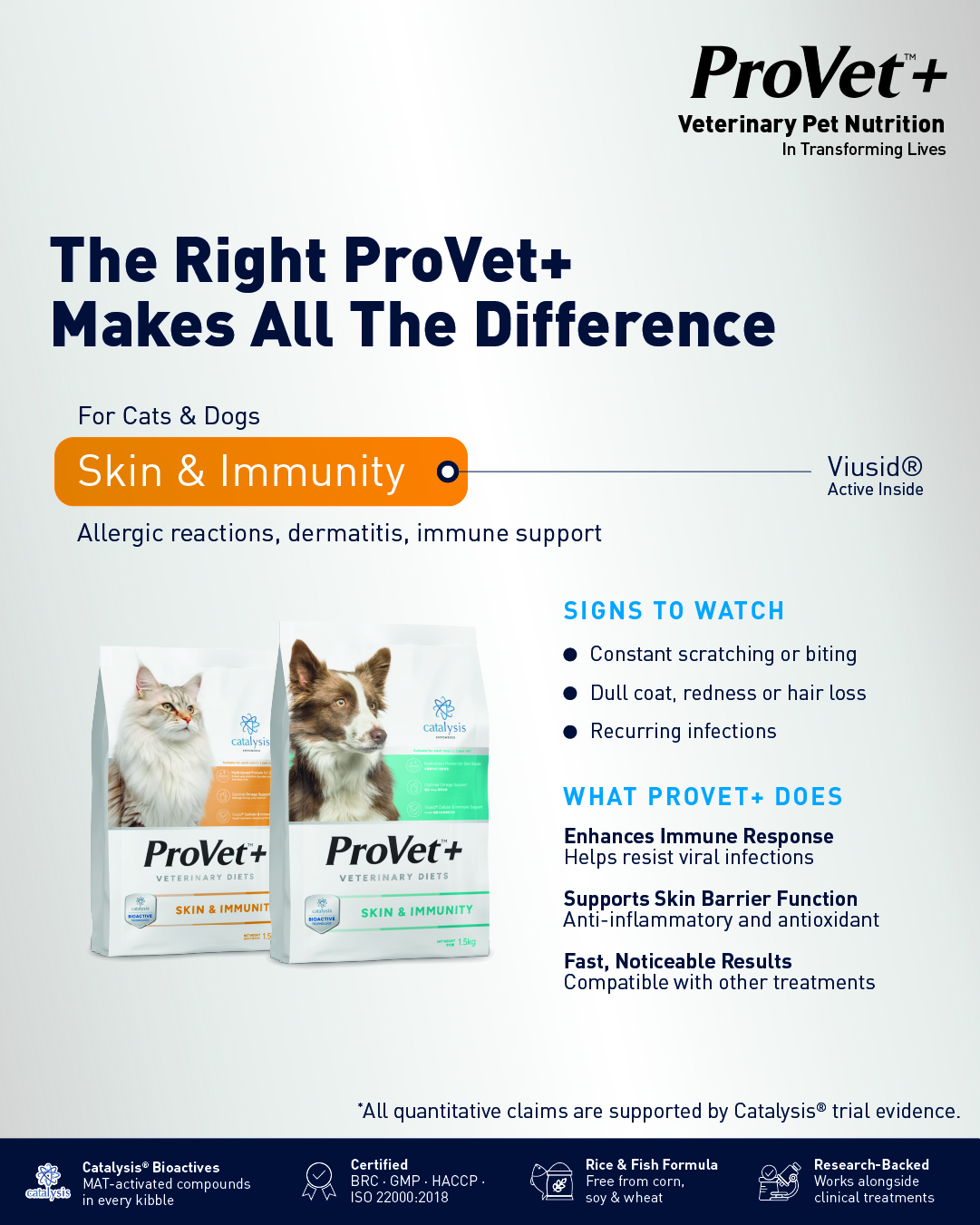
The clinical goal for both the cat and dog formulas is to support a compromised skin barrier while moderating the immune response driving chronic dermatitis.
The formulation relies on four primary structural components.
1. Hydrolysed protein below the allergenic threshold
Both formulas utilise salmon peptide and tuna hydrolysate processed to keep peptides strictly below 6.5 kDa, which is below the molecular weight range typically recognised by the immune system during an allergic response (Masuda et al., 2020).
The base uses fish and rice rather than common allergens like chicken, beef, or wheat, and is formulated without corn, soy, or wheat. Note: this formula is not suitable for pets with a veterinarian-diagnosed fish allergy.
2. Fatty acids for barrier structure and inflammatory support
Poultry fat, sardine oil, and tuna oil provide both omega-6 (linoleic acid) and omega-3 (EPA and DHA) fatty acids.
Omega-6 supports skin barrier integrity and moisture retention, while omega-3 helps moderate inflammatory responses. The dog formula features an omega-6 to omega-3 ratio of approximately 5:1, a target ratio for dermatitis management. The cat formula provides a guaranteed minimum of 0.30% EPA and DHA.
Clinical research supports this nutritional approach. A double-blind, placebo-controlled trial evaluating a diet rich in antioxidants, polyphenols, and omega-3 fatty acids in atopic dogs demonstrated a 49% reduction in CADESI-4 skin lesion scores and a 46.4% reduction in owner-assessed itching by day 60 (Sánchez de Santiago et al., 2021, BMC Veterinary Research).
3. Gut-immune connection
A significant portion of the body’s immune system is located in the gut, meaning digestive health directly influences skin health.
The dog formula includes postbiotics and fructo-oligosaccharides (FOS). The cat formula uses mannan-oligosaccharides (MOS) alongside FOS. Both formulas include yeast-derived beta-glucans for immune modulation and montmorillonite as a natural binder.
4. Micronutrients for skin repair, plus VIUSID®
Zinc, copper, manganese, and selenium support keratin formation and skin enzyme function. Vitamin A and biotin aid epithelial regeneration, while nicotinamide (B3) and pantothenic acid (B5) support lipid synthesis and barrier repair. Vitamins E and C offer antioxidant protection.
The cat formula includes a guaranteed minimum of 0.20% taurine to support skin repair, collagen formation, and coat quality.
Additionally, the formula incorporates VIUSID® , an antioxidant and immune-modulating complex built around activated glycyrrhizic acid designed to support immune resilience and moderate pro-inflammatory cytokines such as TNF-alpha.
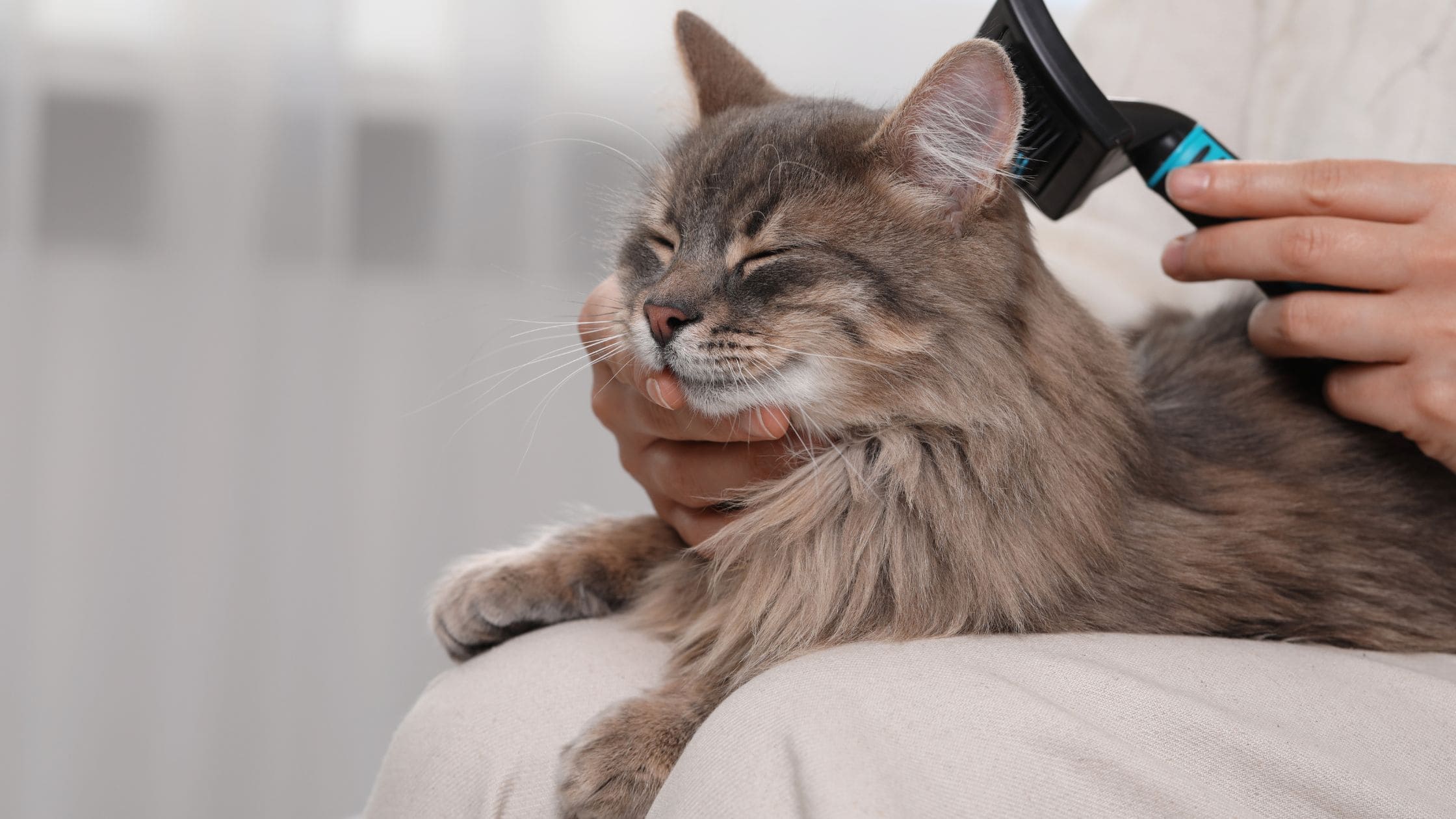
What Diet Can and Cannot Accomplish
For a pet with a food allergy, a properly executed elimination diet can identify the trigger protein. Removing that protein from the diet resolves the underlying issue.
For a pet with atopic dermatitis, no diet can cure the condition entirely, as the triggers exist in the environment rather than the food bowl.
What targeted nutrition can do for an atopic pet is strengthen the skin barrier and reduce the inflammatory response that worsens flare-ups. This makes nutrition a helpful complement to environmental management and veterinary treatments.
Practical Steps for Tropical Climates
Alongside medical care and diet, environmental controls are essential in humid climates:
- Wash pet bedding weekly in hot water.
- Vacuum rugs and soft furnishings frequently.
- Use air conditioning or dehumidifiers in sleeping areas to lower mite populations.
- Keep pets off heavily upholstered furniture where dust mites accumulate.
- Maintain strict, year-round parasite control, as flea allergy dermatitis also lacks an off-season in tropical environments.
While environmental management does not replace a medical diagnosis, it significantly reduces the total allergen load on the animal’s skin.
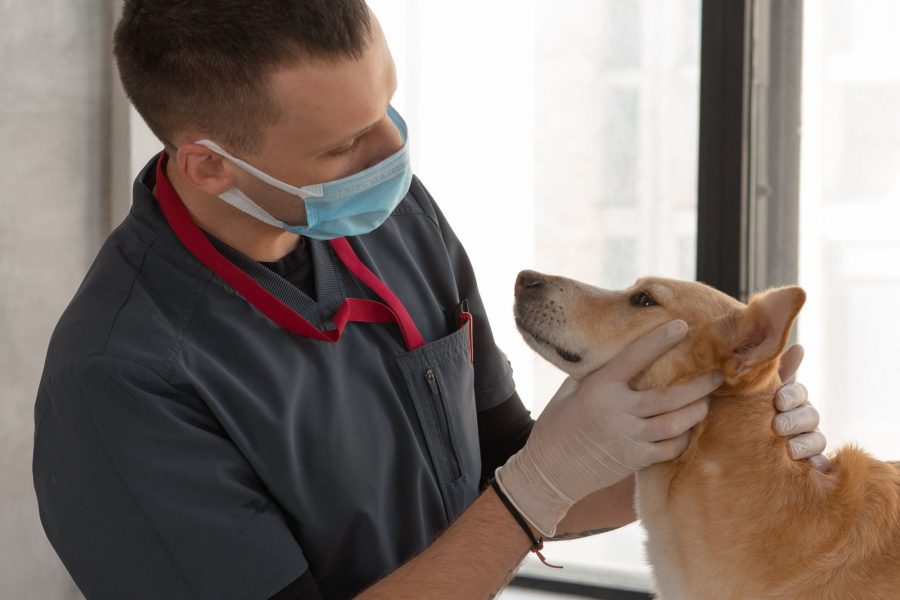
Managing Chronic Itch
Just like humans, managing an itchy pet can be tricky.
The initial step is a veterinary examination to rule out parasites, secondary infections, and distinguish food allergies from atopic dermatitis. If an elimination trial is recommended, choosing a strictly controlled diet and committing to a full eight-week trial is necessary for accurate results.
ProVet+ Skin & Immunity is designed to support this process with a hydrolysed fish-and-rice base, targeted fatty acids, gut-immune support, key micronutrients, and VIUSID® . It serves as an evidence-based option for veterinarians and pet owners managing chronic skin conditions.
*all quantitative medical claims are supported by Catalysis® trial evidence