


Raw feeding and home cooking are growing quickly among pet owners worldwide and especially in Malaysia.
Owners have increasingly expressed that they want to know fully what is in their pets’ bowls. They distrust vague labels. They have watched a pet do badly on a commercial food and would rather cook than trust a commercial brand.
Those are reasonable instincts. At PET WORLD, we want to educate on what the evidence shows, and situations where a formulated veterinary diet is needed for pets who are unwell.
What the Evidence Says About Home-Cooked Recipes for Pets
This is analysed from 200 recipes for home-prepared maintenance diets for dogs, and drawn from 34 sources including veterinary textbooks, pet care books and websites.
Surprisingly, only 9 of the 200 recipes met the minimum nutrient standards established by AAFCO for adult dogs. Meanwhile, 95% lacked an adequate level of at least one essential nutrient, and more than 83% had multiple deficiencies. The nutrients most often inadequate were choline, vitamin D, zinc and vitamin E (Stockman et al., 2013, JAVMA).
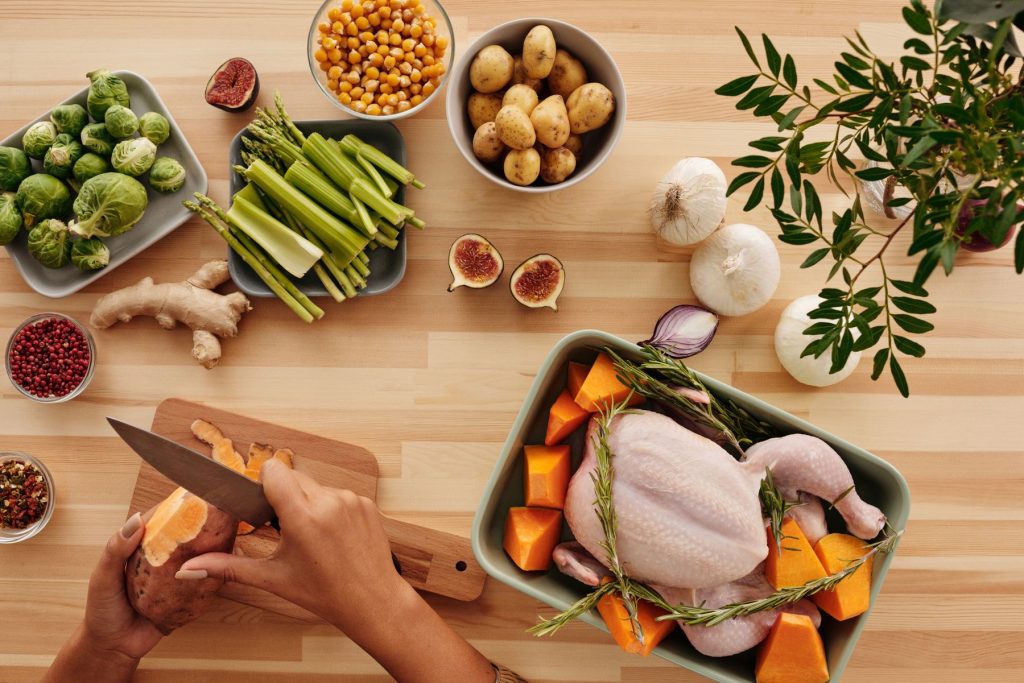
95% of home-cooked recipes for pets were short of at least one essential nutrient.
So the finding is not that home cooking cannot work. Of the recipes written by board-certified veterinary nutritionists, all were nutritionally adequate.
What the Evidence Says About Raw Food for Pets
Raw meat-based diets for pets carry a microbiological risk that is measurable rather than theoretical.
A 2025 study tested 100 commercially available frozen raw meat-based diet products sourced across several countries. The results are shown:
| Pathogen | Positive samples |
|---|---|
| Yersinia enterocolitica | 58% |
| Listeria monocytogenes | 41% |
| Salmonella spp. | 11% |
| Campylobacter spp. | 3% |
Schmid, Barmettler, Stevens & Stephan, 2025, Pets.
Those figures are shocking as they describe commercial frozen products made for the purpose.
From this, two consequences can follow: The pet can become ill or shed pathogens. And the household is exposed through handling, bowls, surfaces and the pet itself, which matters most where there are infants, elderly relatives, pregnant women or anyone immunosuppressed.
The extrusion process to produce dry kibbles applies heat that raw food does not go through, resulting in a low water activity around 0.11 to 0.28 in dry kibbles that does not support microbial growth.
Why Formulated Diets Achieve What Home Cooking Can’t
In the case where your pet has a diagnosed condition, the diet is not food. It is a dosed intervention, and three of its properties cannot be reproduced at home at any level of skill or care.
1. Enzymatic protein hydrolysis
The whole basis of a hypoallergenic veterinary diet is breaking proteins into fragments too small for the immune system to recognise reliably. ProVet+ uses salmon peptide and tuna hydrolysate processed so peptides stay strictly below 6.5 kDa. Many food allergens in dogs and cats fall roughly in the 10 to 70 kDa range. You cannot hydrolyse a protein by cooking it. Boiling, baking and slow cooking denature proteins; they do not cut them into sub-6.5 kDa peptides. This is an industrial enzymatic process, and there is no home equivalent.
2. A guaranteed mineral ceiling
ProVet+ Cat Urinary Support caps magnesium at 0.08% maximum. Hitting a ceiling like that requires knowing the mineral content of every ingredient batch and verifying the finished product by laboratory analysis. A home cook can choose low-magnesium ingredients but cannot guarantee a ceiling, and for struvite management the guarantee is the mechanism.
3. A verified dose of a functional compound
Each ProVet+ formula carries a Catalysis® bioactive loaded during production so the liquid saturates the kibble. Pet World ran a Dosage Assurance exercise, verified by Dr. Chen as Head of R&D, indicating that even assuming an extreme hypothetical 50% processing loss, the delivered dose would still exceed the recommended daily oral threshold on both an as-fed and dry matter basis.
The Bottom Line
For a healthy adult pet, a carefully formulated home-cooked diet can work, and raw carries a measurable microbiological risk that each household has to weigh for itself.
For a pet with a diagnosed condition, the comparison changes. Hydrolysis below 6.5 kDa, a guaranteed mineral ceiling, verified nutrition and batch-to-batch consistency are important.
If your cat or dog is being managed nutritionally, ask your veterinarian whether a ProVet+ veterinary diet fits the plan.